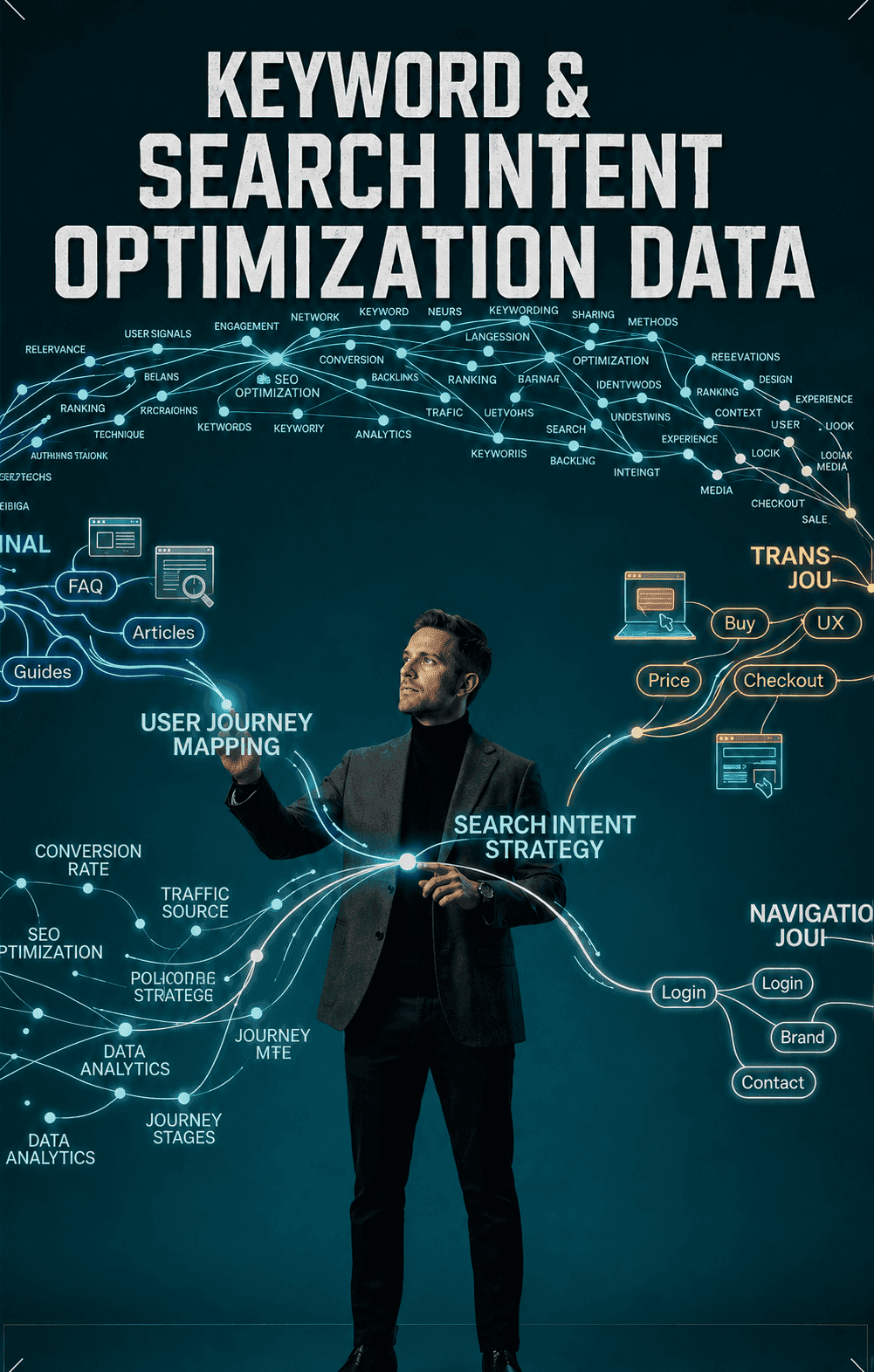
Keyword & Search Intent Optimization
We map the right keyword and search intent to the right page, ensuring the content addresses what users are actually looking for rather than simply matching a keyword.
More than keywords. Every content, structural, and contextual signal works together to satisfy search intent.
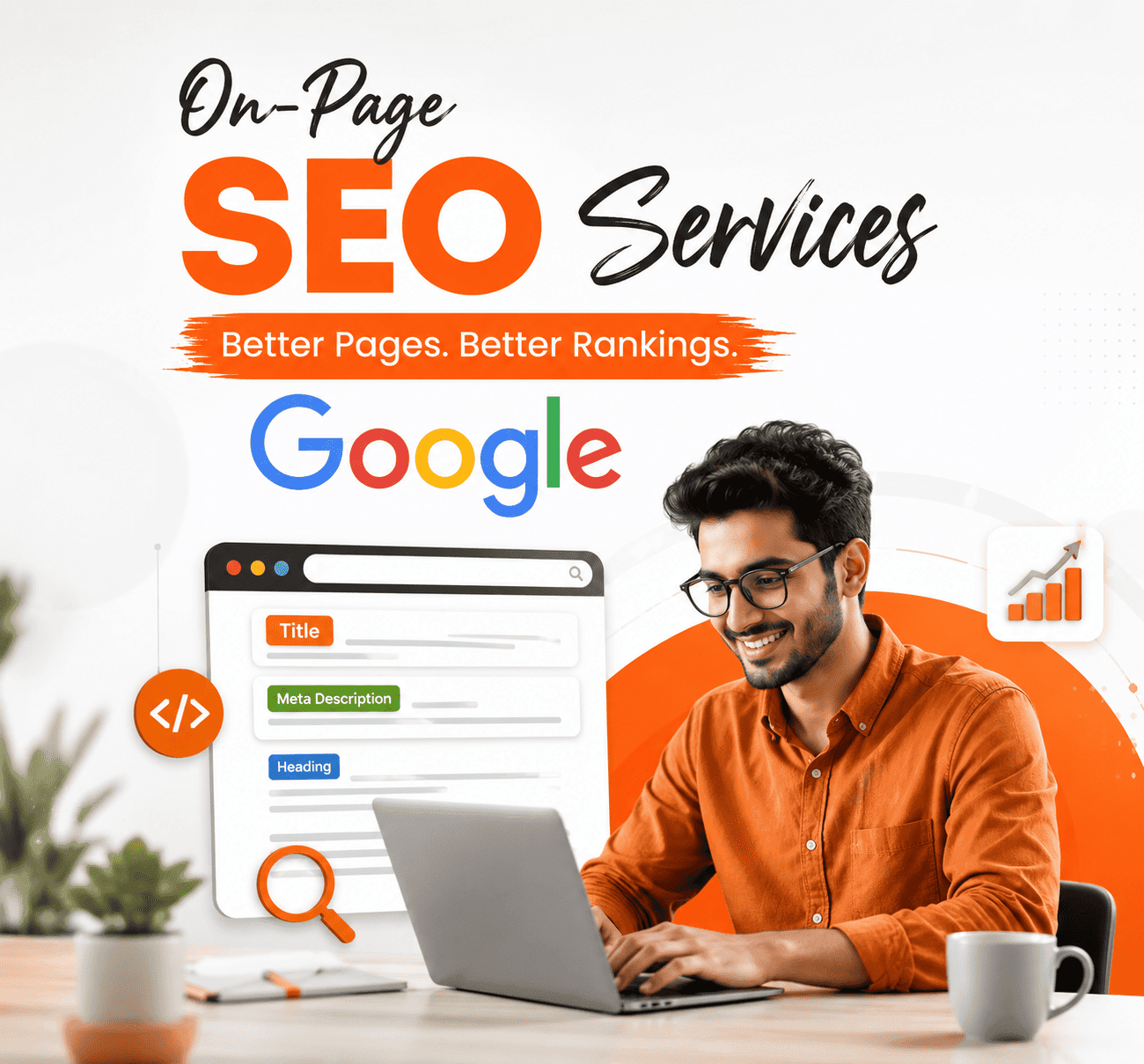
Modifyed Digital delivers on-page SEO services that go beyond the surface-level checklist most websites stop at - adding a keyword to the title, writing a meta description, and calling the page optimized. We work across content structure, search intent, headings, internal linking, URLs, media, schema, and other on-page elements to make each priority page clearer for both users and search engines. For businesses that have invested in content and backlinks but still can't understand why individual pages aren't performing, our approach starts with the page itself.
Part of our SEO Services
Digital Growth
Proven Track Record
Unlike external authority signals, many on-page improvements are directly within your control. We've spent years optimizing the elements that determine whether a page is clear, relevant, useful, and properly connected to the rest of a website.
Lead Metric
300%
Organic Traffic Growth Delivered for an FMCG Client
300+
SEO Projects Delivered
10+ Years
On-Page & Content SEO Expertise
250+
Brands Served
From Lenovo and MakeMyTrip to fast-scaling D2C brands, businesses work with Modifyed Digital to improve the pages that matter most - from search intent and content structure to internal linking and technical on-page elements. Our focus isn't simply putting a keyword on a page. It's making the page genuinely relevant to the query it's trying to rank for.











On-Page SEO Company India
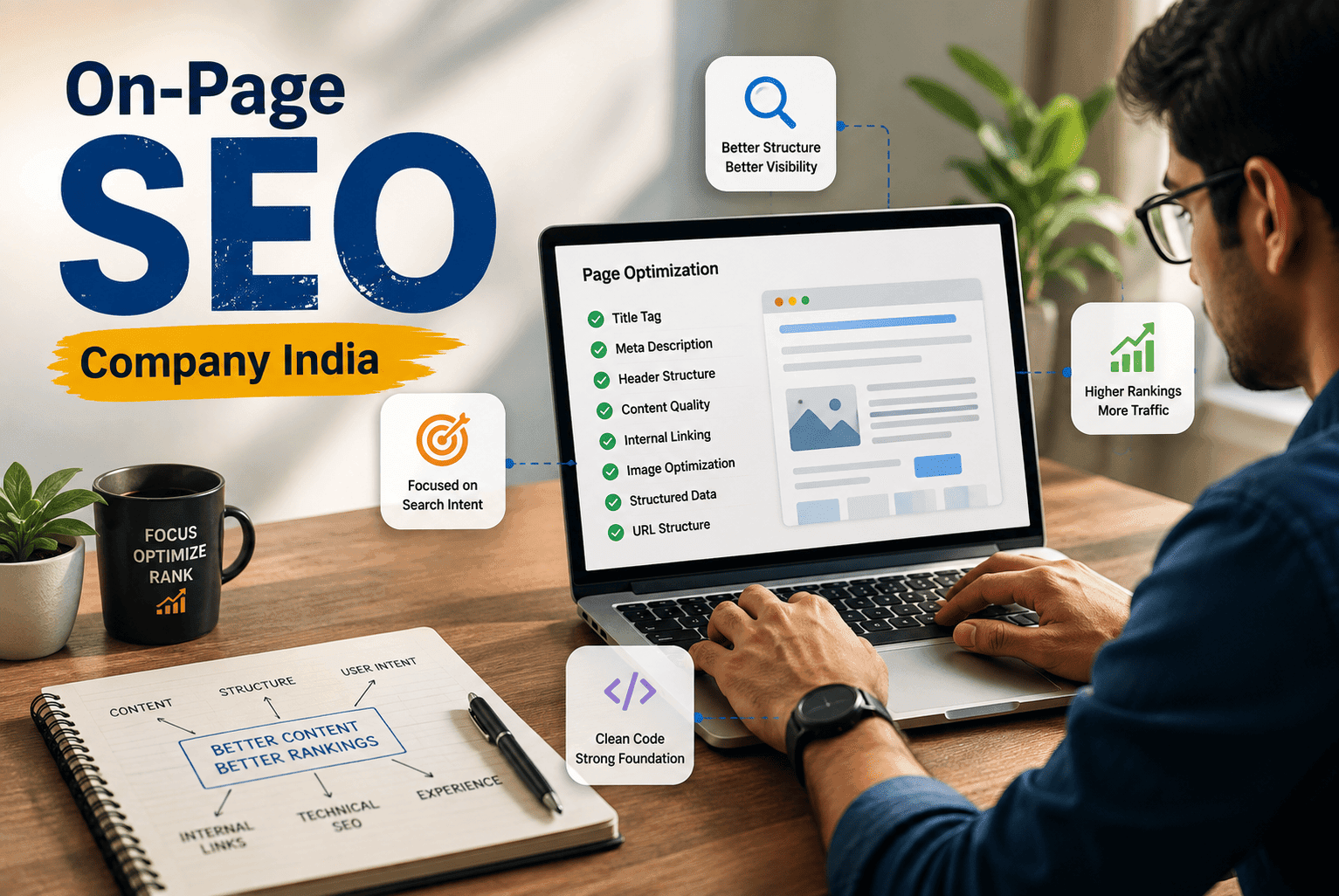
Here's what we find on many websites: a title tag containing the target keyword, a meta description written primarily for search engines, headers with no logical hierarchy, and content that mentions the topic without fully addressing what the searcher actually wanted. The result is a page that may look optimized on paper but still fails to compete effectively in search results.
That's why strong backlink profiles don't automatically translate into strong rankings. On-page SEO helps search engines understand what a page is about, how its information is structured, how it relates to other pages on the site, and whether it adequately addresses the searcher's intent. As on-page SEO experts, we treat content, structure, internal links, media, URLs, and structured data as connected elements - not isolated boxes on a checklist.
Every element is optimized to make your priority pages more relevant, useful, understandable, and internally connected.
We map the right keyword and search intent to the right page, ensuring the content addresses what users are actually looking for rather than simply matching a keyword.
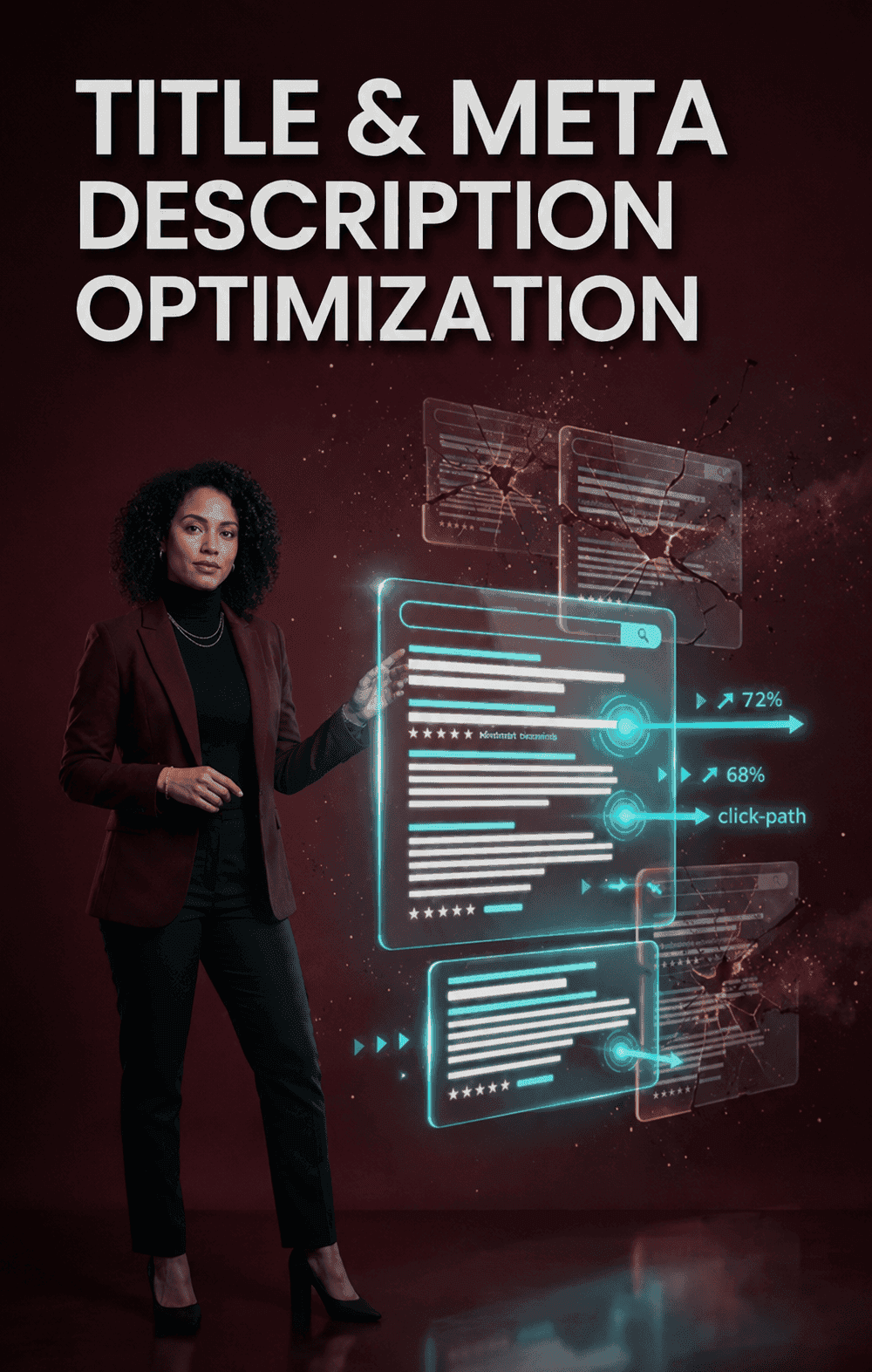
Titles and descriptions are written to communicate relevance clearly and encourage qualified users to click from the search results.
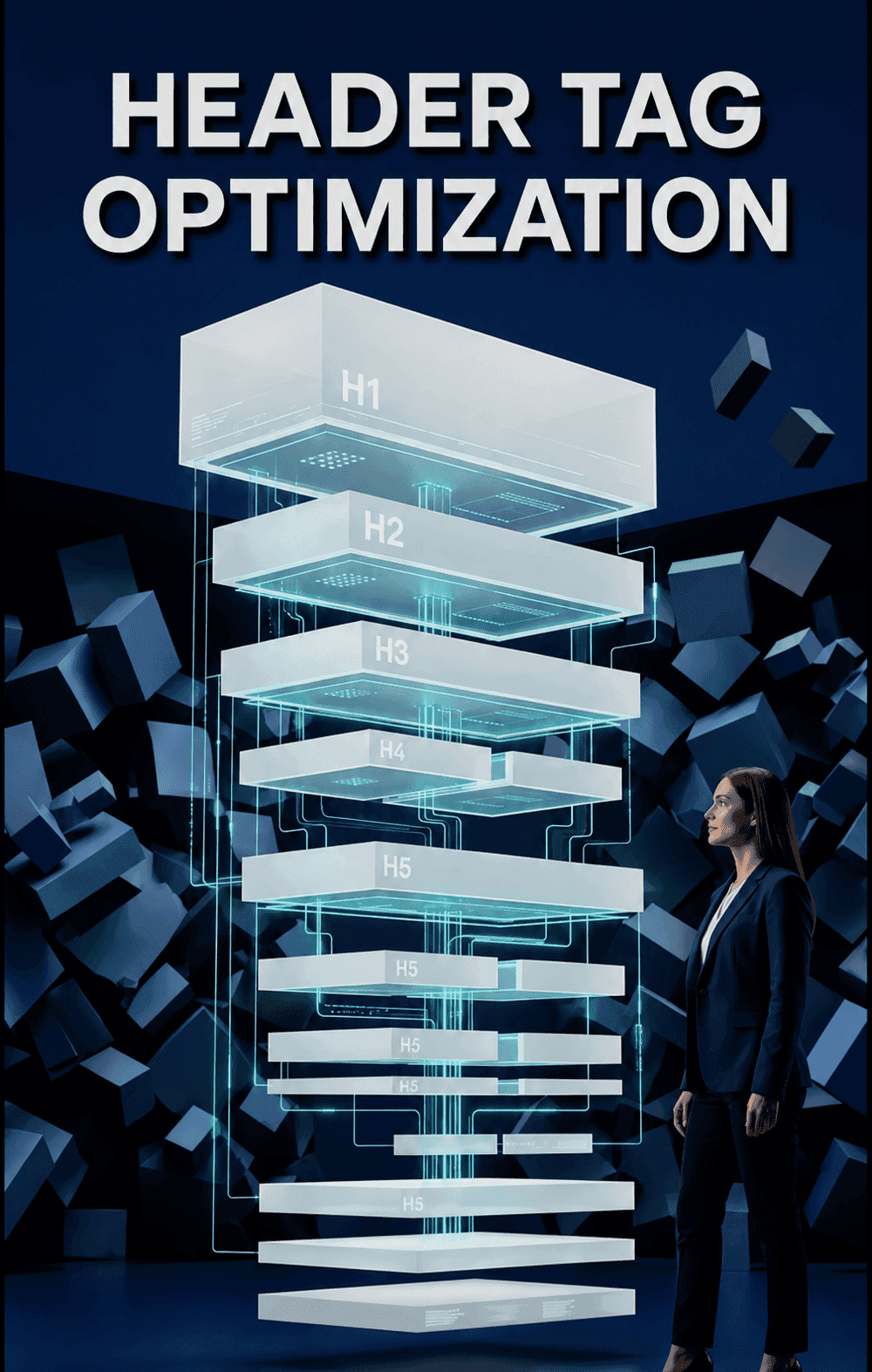
A logical H1–H3 hierarchy makes content easier for users to navigate and helps search engines understand the relationships between major topics and subtopics.

We restructure existing content, improve topical coverage, remove unnecessary repetition, address content gaps, and align the page more closely with user intent.

A deliberate internal linking structure helps users discover relevant content while directing contextual authority toward important pages across your website.
Clean, descriptive URLs that reflect the site's information architecture without unnecessary parameters, depth, or complexity.

We optimize image formats, file sizes, filenames, alt text, captions where appropriate, and other media elements to support accessibility, performance, and search visibility.

Relevant structured data is implemented to help search engines understand page types, entities, products, organizations, articles, and other eligible content.
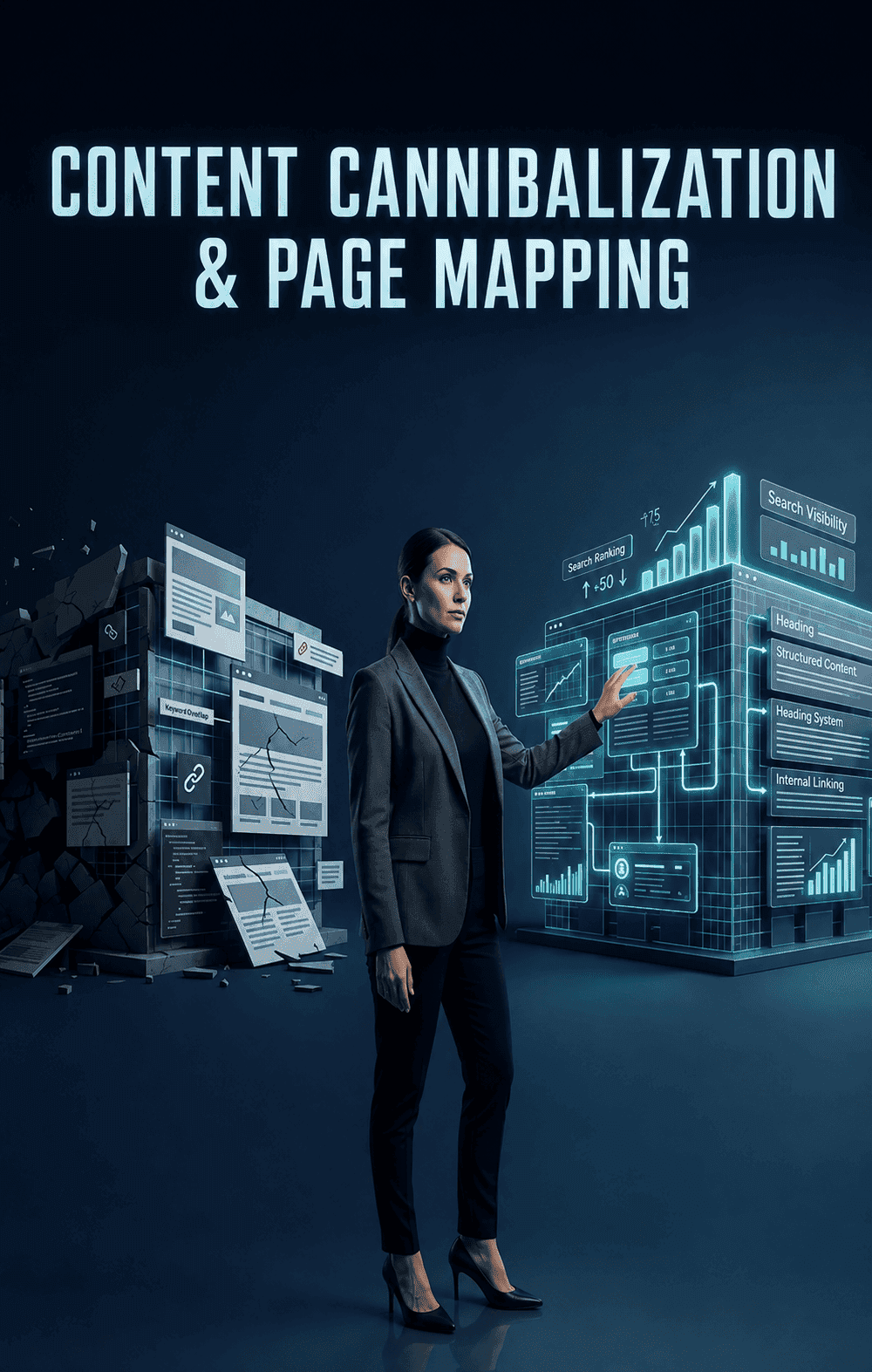
We identify cases where multiple pages compete for similar search terms and recommend clearer keyword-to-page mapping to reduce unnecessary overlap.
We map the right keyword and search intent to the right page, ensuring the content addresses what users are actually looking for rather than simply matching a keyword.
Titles and descriptions are written to communicate relevance clearly and encourage qualified users to click from the search results.
A logical H1–H3 hierarchy makes content easier for users to navigate and helps search engines understand the relationships between major topics and subtopics.
We restructure existing content, improve topical coverage, remove unnecessary repetition, address content gaps, and align the page more closely with user intent.
A deliberate internal linking structure helps users discover relevant content while directing contextual authority toward important pages across your website.
Clean, descriptive URLs that reflect the site's information architecture without unnecessary parameters, depth, or complexity.
We optimize image formats, file sizes, filenames, alt text, captions where appropriate, and other media elements to support accessibility, performance, and search visibility.
Relevant structured data is implemented to help search engines understand page types, entities, products, organizations, articles, and other eligible content.
We identify cases where multiple pages compete for similar search terms and recommend clearer keyword-to-page mapping to reduce unnecessary overlap.
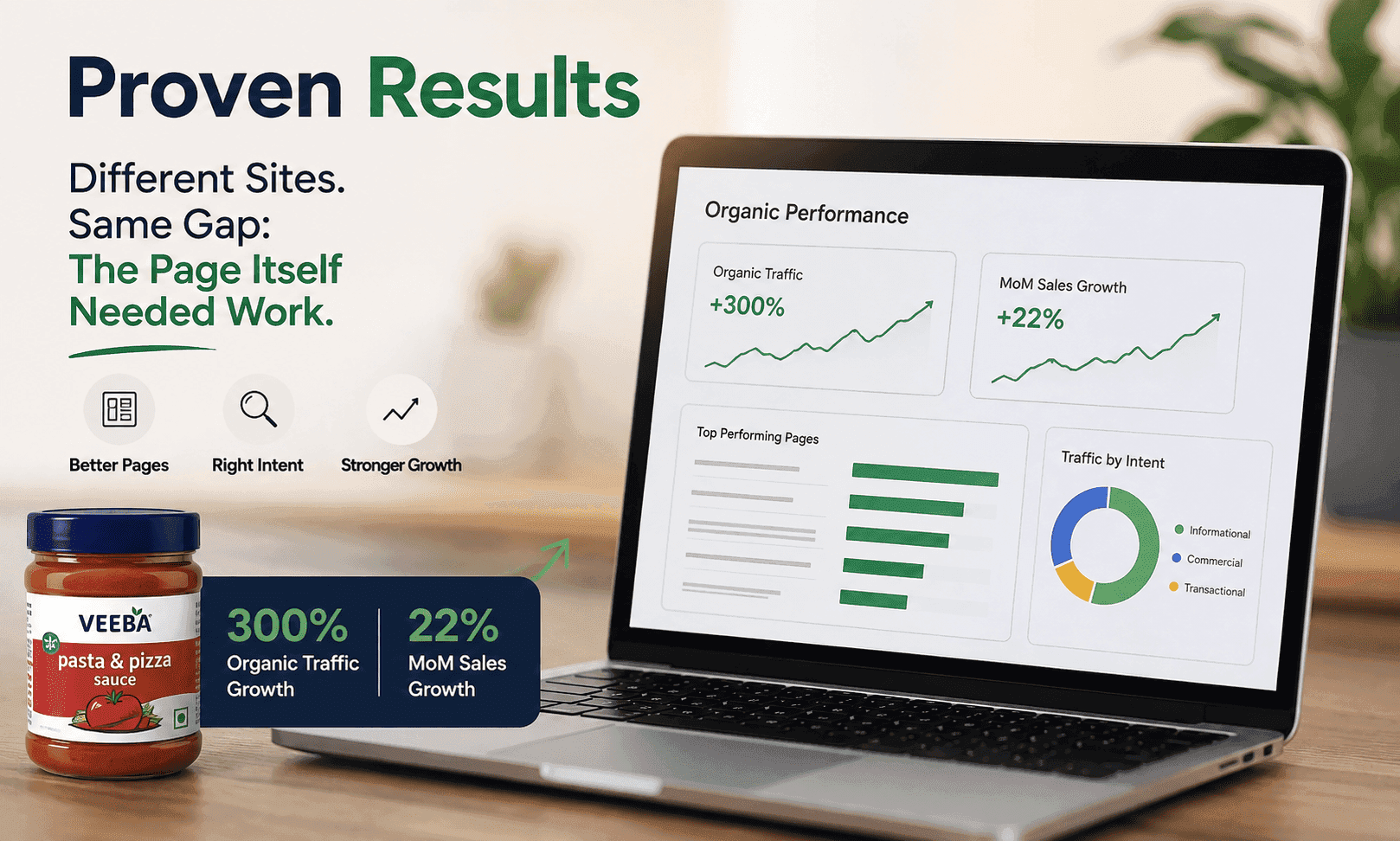
An FMCG brand with strong organic potential but underperforming pages. An ecommerce site dealing with overlapping category content. A services business whose pages weren't fully aligned with the intent behind their target searches. Different starting points, but the same principle: improve the page before assuming more external authority is the answer. For Veeba, organic traffic grew 300% alongside 22% month-on-month sales growth during the SEO engagement. Where on-page SEO forms part of a broader SEO campaign, we connect page-level improvements with content strategy, technical SEO, internal linking, and authority-building activity to create a more complete growth system.
A page can be technically optimized and still struggle to rank because search engines evaluate relevance, usefulness, structure, and overall context - not just whether a keyword appears in the title. Here's what proper on-page work changes:
Pages are structured around what users are actually trying to accomplish when they search, rather than forcing a keyword into existing copy.
Logical headings, content hierarchy, contextual links, and clear page structure make the relationships between topics easier to understand.
A technically correct title isn't enough. We write titles that communicate relevance clearly while giving searchers a reason to choose your result.
Many on-page elements can be improved directly on your own website without waiting for external websites, publishers, or link-building opportunities.
Clear sections, concise answers, meaningful entities, supporting context, and strong information architecture can make content easier for modern search systems to interpret and surface.
A page-level audit identifies which pages and which elements deserve attention first, helping your team prioritize work based on potential impact.
Get a page-by-page on-page SEO review of your priority URLs. We'll identify issues across search intent, content structure, headings, internal links, metadata, URLs, media, and other relevant on-page elements. The audit is prioritized by potential impact so you know what needs attention first.

Why Modifyed
On-page SEO is more than changing title tags and adding keywords to a page. Effective on-page SEO optimization requires understanding search intent, page relevance, content quality, website structure, and how every page fits into the broader search strategy. Our on-page SEO services combine keyword research, content optimization, internal linking, and technical improvements to make each priority page more relevant, useful, and competitive in search results.
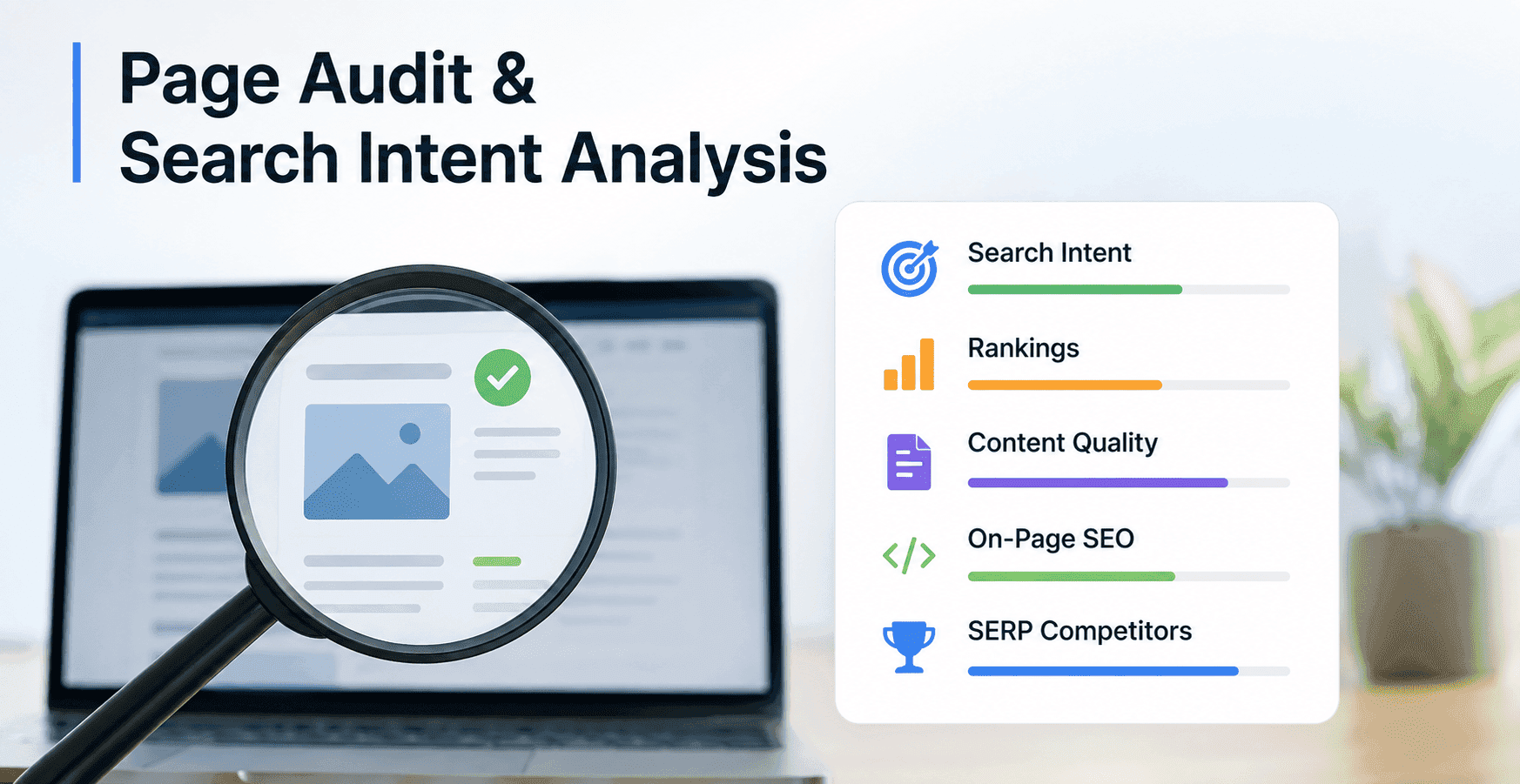
We start by evaluating priority pages against search intent, current rankings, organic performance, SERP competitors, content quality, page structure, and on-page SEO factors. This helps us identify content gaps, optimization opportunities, and the specific improvements needed to make each page more competitive for its target searches.
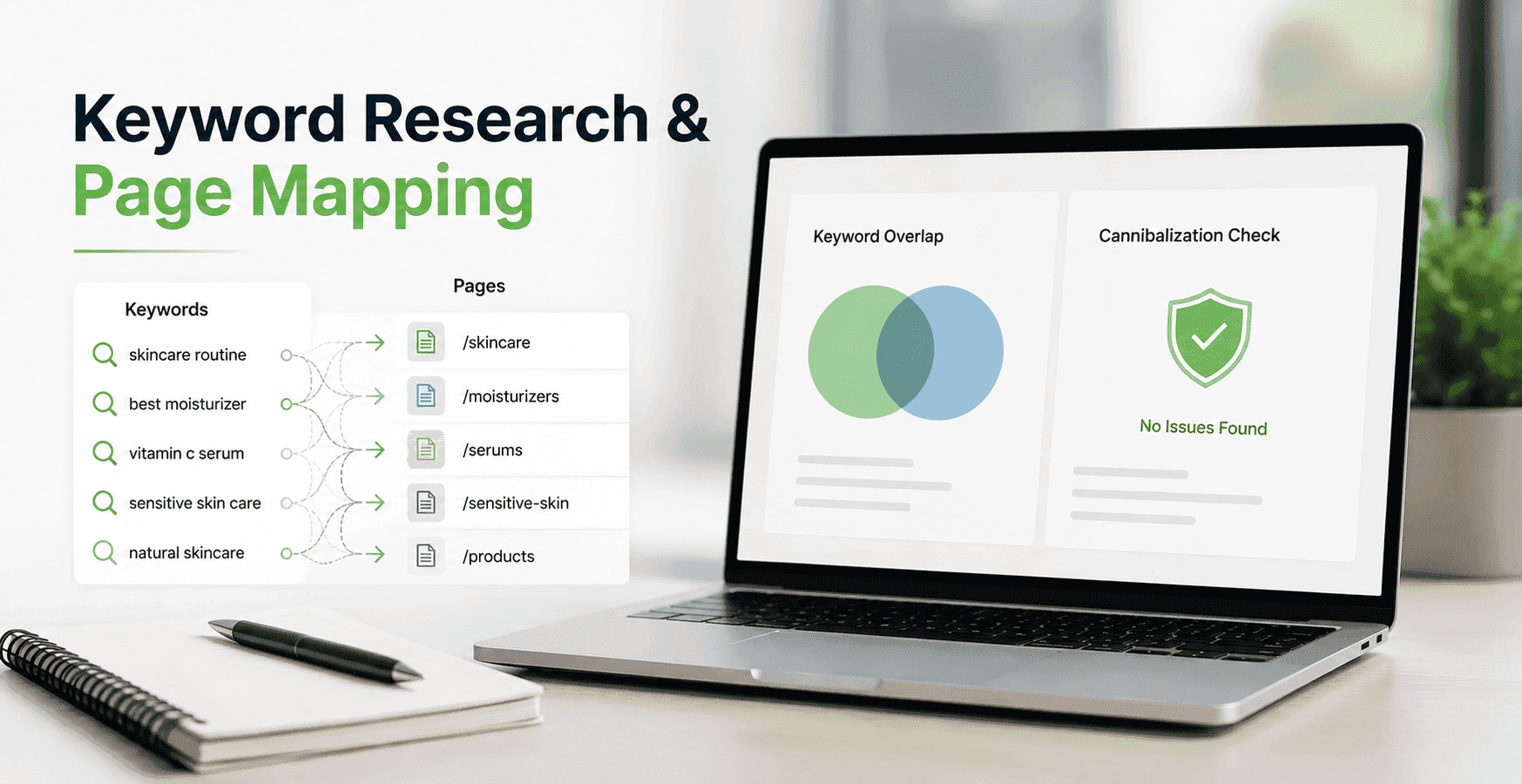
Our on-page SEO optimization process begins with identifying primary and secondary keywords based on search intent, relevance, competition, and business value. We map these keywords to the right pages and review keyword overlap and keyword cannibalization to ensure multiple pages aren't competing for the same search terms.
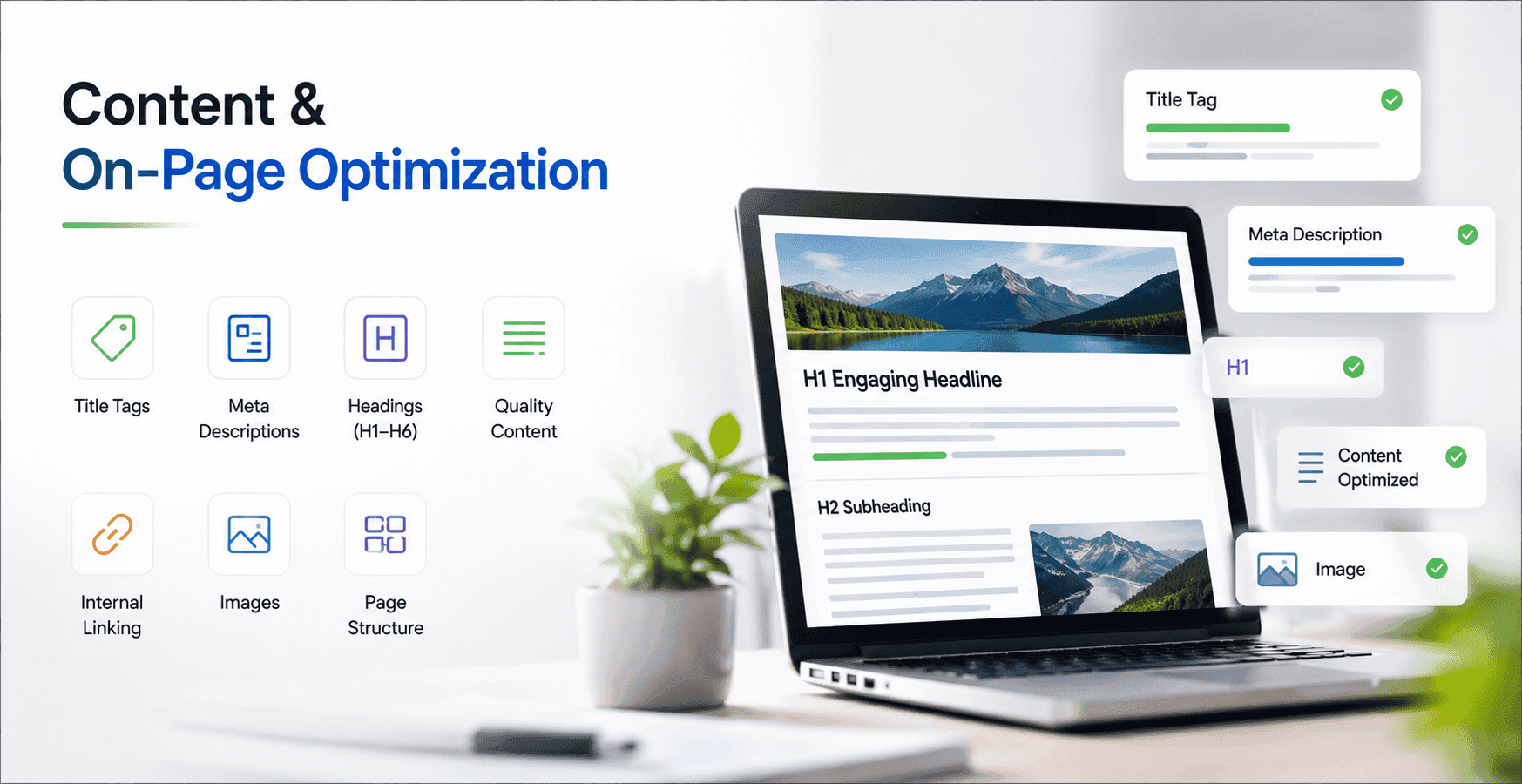
We optimize the elements that influence both search relevance and user experience, including title tags, meta descriptions, H1-H6 headings, website content, keyword placement, content depth, internal linking, images, and page structure. Our content optimization approach focuses on satisfying search intent naturally rather than simply adding keywords to existing copy.
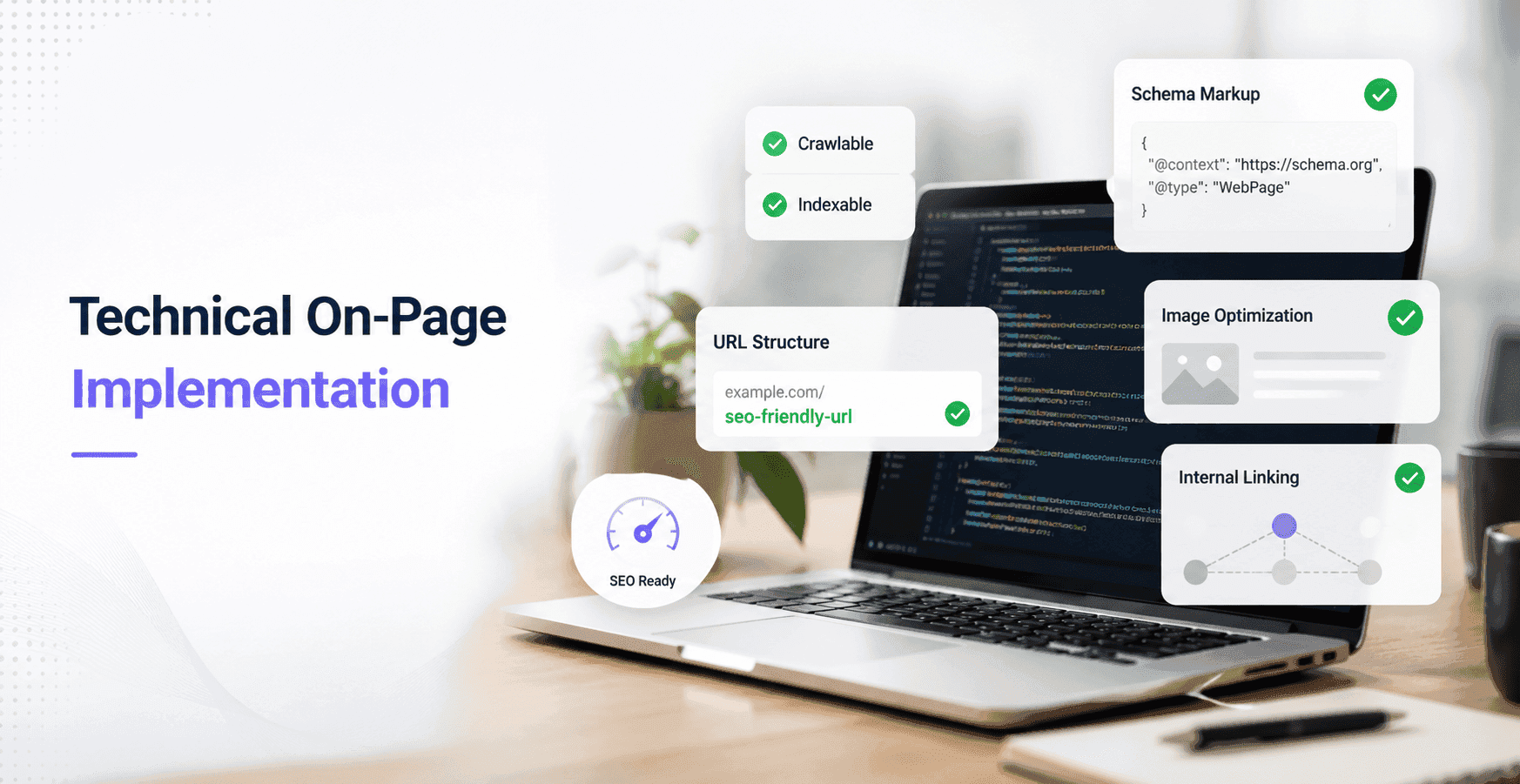
Where required, our on-page SEO services also address technical elements that support search visibility, including URL structure, image optimization, schema markup, canonicalization, crawlability, indexability, and internal linking. We coordinate with your development team or handle implementation ourselves to ensure SEO improvements support both search engines and website users.
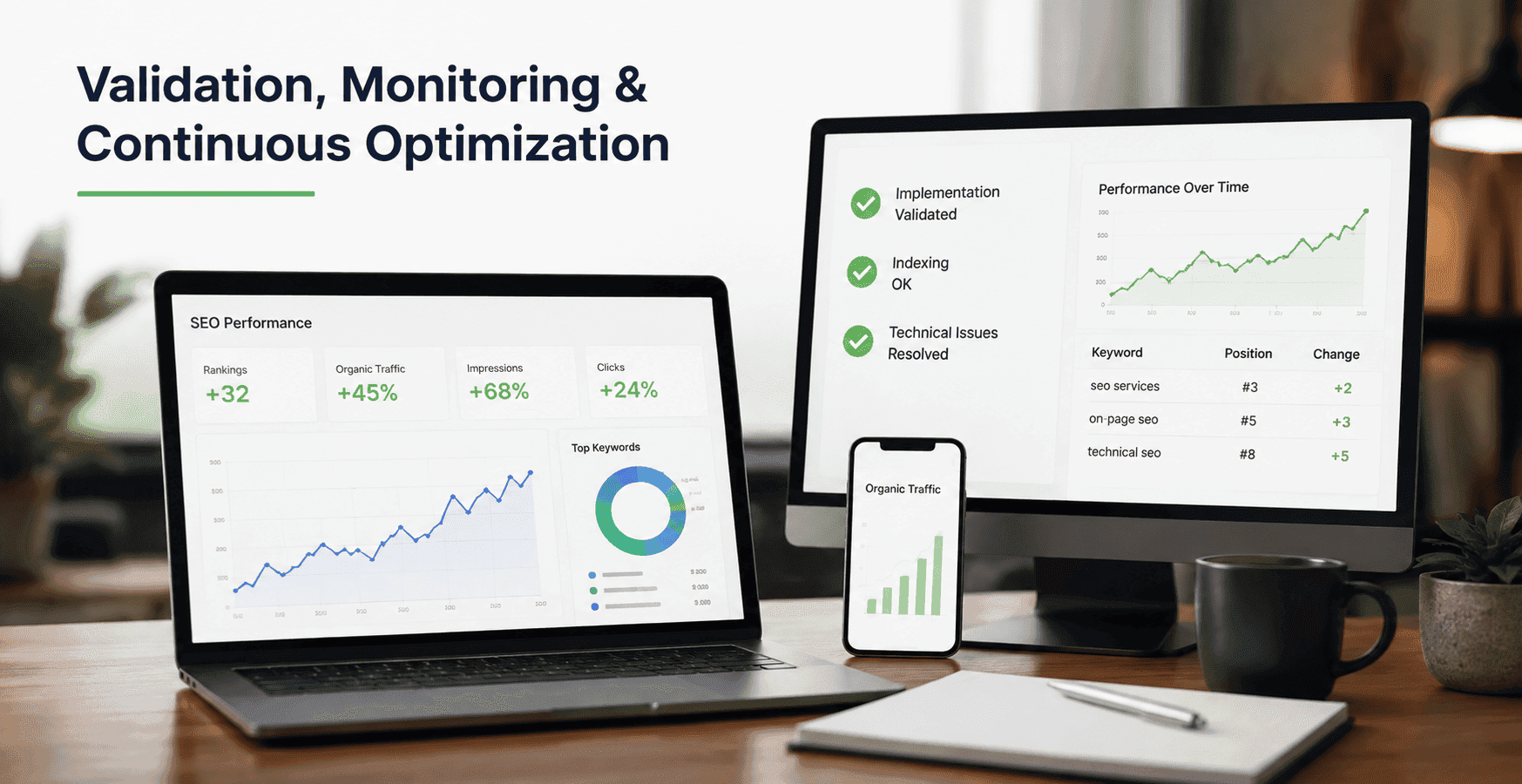
SEO doesn't end when the changes go live. We validate every implementation, check for indexing or technical issues, and monitor keyword rankings, impressions, clicks, organic traffic, and page-level performance. Based on real performance data, we continuously refine content and on-page elements to improve search visibility, rankings, and long-term organic growth.
On-page SEO primarily focuses on elements that communicate a page's relevance and content, including titles, headings, content, internal links, and related page elements. Technical SEO focuses more broadly on areas such as crawling, indexing, site performance, rendering, and website infrastructure. The two areas can overlap in areas such as URLs and structured data.
Yes. Ecommerce sites may require specific work around product pages, category structures, filters, internal linking, and relevant structured data, while WordPress sites may require additional attention to templates, plugins, taxonomies, and content structures.
Some changes can be reflected after search engines recrawl and reprocess a page, but ranking movement depends on competition, website authority, query intent, and the scale of changes. Meaningful results can take several weeks to months rather than following one fixed timeline.
It can be enough for some lower-competition searches, especially where the website already has sufficient authority. For highly competitive keywords, on-page SEO typically works alongside technical SEO, content development, internal linking, digital PR, and other authority-building activities.
Yes. We begin with a page-level audit to understand the current situation and prioritize the work based on the pages, queries, and issues with the greatest potential impact.
Yes. Clear content structure, useful information, contextual relationships, and well-defined entities can help modern search systems interpret content more accurately. However, no on-page tactic can guarantee inclusion in AI-generated answers or AI Overviews.
Yes. In many cases, improving an existing page is more appropriate than creating another URL. We evaluate the current page, its rankings, traffic, intent, content quality, and competitive landscape before deciding whether to optimize, consolidate, or create something new.
Yes. Internal linking is an important part of our on-page approach. We use contextual links to improve navigation, connect related content, and help distribute internal authority across important pages.